Health and Safety Policy for Landscaping Temple
 This Health and Safety Policy sets out the principles and responsibilities that support safe, well-managed landscaping work at Temple. It applies to all tasks carried out in outdoor environments and aims to reduce risk, protect people, and maintain consistent standards. The policy reflects a proactive approach to safety, where hazards are identified early and controlled before work begins.
The scope of this policy covers all routine and non-routine landscaping activities, including ground preparation, planting, pruning, mowing, edging, soil movement, waste handling, and the use of tools and powered equipment. It also applies to temporary works, changing weather conditions, and shared work areas. Safety expectations are built into planning, supervision, and day-to-day operations, so that landscaping Temple activities are carried out with care and attention.
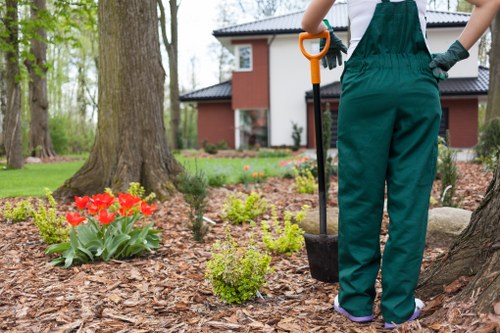 The policy is based on the principle that every person involved in the work has a duty to act responsibly. Managers, supervisors, operatives, and contractors must follow safe systems of work, report hazards promptly, and avoid actions that could put themselves or others at risk. A culture of preventive thinking is essential, especially in environments where moving equipment, uneven surfaces, and changing site conditions can create hazards quickly.
Core Safety Principles
Risk assessment is central to this policy. Before any task begins, a suitable assessment must consider access routes, ground stability, overhead obstacles, vehicle movement, manual handling, sharp tools, noise, dust, and exposure to weather. Where risks cannot be removed entirely, control measures must reduce them to an acceptable level. This may include barriers, supervision, task rotation, protective equipment, or revised work methods. The aim is always to support safe landscaping services while maintaining productivity and quality.
Safe use of equipment is mandatory. All tools and machinery must be suitable for the task, maintained in good condition, and used only by trained or authorised personnel. Guards and safety devices must remain in place, and defective equipment must be taken out of service immediately. Pre-use checks should be routine, and equipment must be stored securely after use. These expectations help prevent injury and support reliable landscaping operations.
 Manual handling must be planned carefully to reduce strain and injury. Loads should be assessed before lifting, and team lifts or mechanical aids used whenever needed. Repetitive work, awkward postures, and prolonged bending should be minimised through task planning and work breaks. Staff should understand how to move materials safely and how to recognise early signs of fatigue. This approach protects the workforce and strengthens the overall safety of landscape management work.
Working Practices and Protective Measures
PPE must be selected according to the task and risk level. Depending on the activity, this may include safety footwear, gloves, eye protection, hearing protection, hi-vis clothing, or weather-appropriate items. PPE is a last line of defence and must be worn correctly and maintained in good order. Where clothing or equipment becomes damaged, it should be replaced without delay. A consistent PPE standard supports safer landscaping Temple work across varying conditions.
Site conditions can change rapidly, so work areas must be monitored throughout the day. Wet ground, hidden obstacles, unstable slopes, and poor visibility all increase risk. Supervisors should pause work if conditions become unsafe and resume only when controls are in place. Temporary hazards such as loose materials, open excavations, or moving plant must be clearly managed. Safe housekeeping, including prompt removal of waste and debris, reduces trips, slips, and falls.
At the middle of operations, communication remains critical. Clear instructions, defined work zones, and awareness of nearby people help prevent confusion and accidents. Workers must know what others are doing, especially when operating machinery or moving materials in shared spaces. Basic hand signals, verbal checks, or agreed routines may be used to improve coordination. Effective communication is a key part of landscaping health and safety because it reduces avoidable mistakes and supports controlled progress.
Training, Incident Response, and Review
Training is essential to ensure that all workers understand safe methods, emergency actions, and the correct use of tools and equipment. Induction should cover general hazards, task-specific risks, first aid arrangements, and reporting procedures. Refresher training may be needed when methods change, new equipment is introduced, or incidents show a need for improvement. Competence should be verified before people are allowed to work independently.
Accidents, near misses, and unsafe conditions must be reported and reviewed without delay. Prompt reporting helps identify root causes and prevents repeat incidents. Where an injury or emergency occurs, work should stop if necessary, and the situation managed according to the planned response. Emergency arrangements should consider access for assistance, communication, and the safe movement of people away from danger. This helps ensure that landscaping safety remains active rather than reactive.
 This policy must be reviewed regularly to keep it effective and relevant. Changes in work methods, equipment, workforce size, or site conditions may require updates to risk controls and procedures. Reviews should also consider incident trends, inspection findings, and feedback from those carrying out the work. Continuous improvement is part of responsible landscape operations and helps maintain a strong safety culture.
Responsibilities and Commitment
Management is responsible for providing suitable resources, competent supervision, and a work environment where safe practice is expected and supported. Employees and contractors are responsible for following instructions, using equipment correctly, and speaking up when something appears unsafe. Everyone should contribute to maintaining orderly, controlled, and respectful workspaces. Shared accountability helps create dependable standards across all landscaping Temple activities.
The objective of this policy is not only compliance, but the prevention of harm. Safe landscaping depends on planning, awareness, and disciplined working habits. By applying risk controls, maintaining equipment, wearing suitable PPE, and responding quickly to changes or concerns, the workforce can complete tasks safely and efficiently. The result is a safer environment for workers, visitors, and anyone affected by the work.
 In summary, this Health and Safety Policy provides a clear framework for safe landscaping work at Temple. It supports good judgement, careful supervision, and ongoing review so that risks are managed effectively. When these principles are followed, landscape safety becomes part of everyday practice rather than an afterthought.