Recycling and Sustainability at Landscaping Temple
 Landscaping Temple is committed to building greener outdoor spaces with a practical, measurable approach to sustainability. From careful material sorting to smarter fleet choices, our landscaping waste and recycling practices are designed to reduce environmental impact while supporting the communities we work in. In a busy local area where gardens, commercial grounds, and public spaces all generate different waste streams, the goal is to make sure more material is recovered, reused, and recycled rather than sent to landfill.
Our current recycling percentage target is to divert 90% of reusable and recyclable landscaping waste away from landfill. That includes soil, green waste, timber offcuts, metal, cardboard, plastics, and selected hard landscaping materials where recovery is possible. We monitor progress carefully because sustainable landscaping is not only about the finished space; it is also about the journey of materials before and after installation. By setting a clear target, Landscaping Temple can keep improving the way landscaping waste is managed across every project.
Across the boroughs we serve, waste separation is increasingly important. Different local authorities often ask for materials to be sorted into distinct streams such as green waste, general waste, timber, and recyclable packaging. We support that approach by separating materials on site wherever practical, making it easier for local transfer stations to process loads efficiently. This also helps reduce contamination, which can otherwise prevent clean recyclables from being recovered. The result is a more responsible and more effective recycling pathway for landscaping materials.
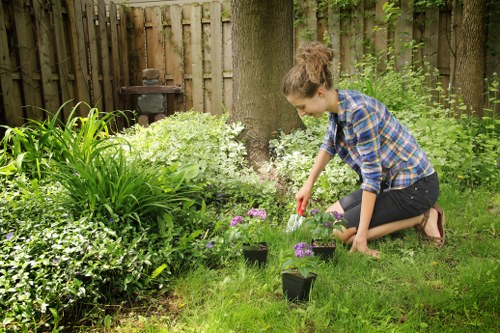 One of the most important parts of our recycling process is working with local transfer stations and licensed waste facilities. These sites help ensure that landscaping waste is handled in line with current environmental requirements, with suitable materials sent onward for composting, recycling, or specialist processing. Green waste, for example, can often be turned into mulch or compost, while certain rubble and inert materials may be reclaimed for aggregate use. Choosing the right transfer station matters because it supports lower transport emissions and improves the chance of useful recovery.
Landscaping Temple also believes sustainability should extend beyond waste handling. That is why we include low-carbon vans in our operations whenever possible, reducing emissions from site visits, deliveries, and material collection. Modern efficient vans, route planning, and grouped journeys all help cut fuel use. When combined with better loading practices and fewer unnecessary trips, these measures make a meaningful difference. Sustainable landscaping depends on more than recycled content; it relies on lower-carbon logistics too.
Our teams are trained to recognise different waste types and apply the right sorting process for each job. In residential settings, this may involve separating hedge trimmings, turf, and soil from packaging and non-organic waste. In commercial or public projects, larger volumes may be sorted into dedicated skips or collection areas. This careful approach is especially useful in boroughs where local recycling systems are designed around clear waste separation, allowing us to align our methods with local expectations and improve overall recovery rates.
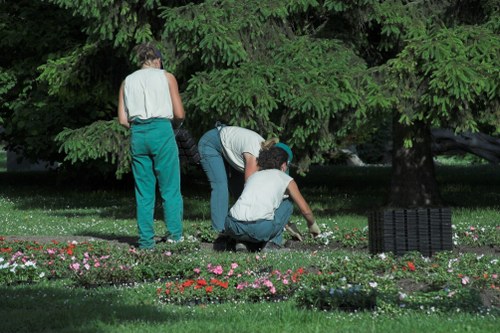 Partnerships are another key part of our sustainability work. Landscaping Temple supports local charities and community organisations by identifying suitable materials for donation or reuse, rather than disposal. Surplus plants, usable timber, planters, decorative materials, and selected garden items may be redirected to charitable groups where appropriate. This helps extend the life of materials and supports good causes at the same time. Reusing items in this way is a simple but effective form of recycling activity that benefits both the environment and the local community.
We also look for ways to reduce waste before it is created. Careful ordering, accurate measurements, and efficient project planning all help avoid over-purchasing materials that may later need recycling or disposal. When items are chosen with durability in mind, they last longer and are less likely to become waste prematurely. This supports the wider principles of sustainable landscaping, where design, installation, and maintenance all contribute to a lower environmental footprint.
Responsible recycling is not just a behind-the-scenes process; it shapes the quality of the landscapes we create. By choosing materials that can be reclaimed or responsibly processed, we help ensure that outdoor spaces remain attractive while also reducing pressure on natural resources. This is particularly relevant in urban and suburban areas, where landscaping projects often generate a mix of organic waste, packaging, and construction-related materials that need to be managed carefully.
 In practical terms, our recycling and sustainability strategy is built around three goals: reduce, reuse, and recover. We reduce waste through planning and efficient purchasing. We reuse where materials can be safely repurposed in other projects or through charity partnerships. We recover by sending recyclable waste to appropriate transfer stations and facilities. This balanced method helps Landscaping Temple maintain a high recycling rate while still delivering reliable, high-quality landscaping services.
We also pay attention to the carbon impact of everyday operations. Low-carbon vans are part of a wider effort to improve fleet efficiency, and we are continuously reviewing better options for fuel use, maintenance, and vehicle replacement. Where feasible, we choose vehicles that suit the work without excess size or emissions. In combination with local sourcing and sensible route scheduling, this helps lower the environmental cost of moving people, tools, and materials between sites.
As recycling systems continue to evolve across boroughs, we remain committed to adapting our methods so they stay aligned with local expectations and environmental best practice. Whether it is separating green waste from inert waste, keeping packaging clean for recycling, or directing reusable items to community partners, the aim is always the same: to make landscaping sustainability practical, measurable, and effective.
 Landscaping Temple’s approach to recycling is part of a wider responsibility to create greener places with fewer environmental costs. By aiming for a 90% recycling target, using local transfer stations, building partnerships with charities, and operating low-carbon vans, we are helping turn waste management into a positive part of the landscaping process. The result is a more circular approach to outdoor work, where more materials are reused, more waste is recovered, and more value stays within the community.
Our Sustainability Priorities
- High recycling performance with a clear 90% diversion target
- Local transfer stations to support efficient, compliant waste handling
- Charity partnerships that enable reuse and donation where suitable
- Low-carbon vans to reduce transport emissions across projects
- Careful waste separation to match borough recycling requirements and limit contamination
Why It Matters
For Landscaping Temple, sustainability is not an added extra; it is a core part of how we work. Every load sorted correctly, every reusable item donated, and every lower-emission journey taken contributes to better outcomes for the environment and the local area. By combining practical recycling systems with thoughtful operations, we support landscapes that look better and leave a lighter footprint behind.